Card Connect: Connect & Win!
- 4.9
- Rating
- 100.00K
- Installs
- Free
- Price
 Analysis by App-foxy
I found Card Connect: Make Sequences most interesting as a quiet, rules-focused board game rather than a fast card battler. Its basic idea is easy to understand: connect cards into sequences, then decide how to use each turn to improve your position. That makes it approachable for casual players, but the strategic choices give it more staying power than a simple matching game. I spent time looking at how comfortably it works in different everyday situations, especially when attention, vision, movement, or the surrounding environment may affect play.
FunCraft Games presents it as a free game for everyone, and that broad audience makes sense. It is available for Android devices running at least version 7.0, with the current release listed as 1.2.24391. The game has reached over one hundred thousand installs and holds a 4.8 average from around three thousand ratings, alongside hundreds of written reviews. Those figures suggest that the straightforward card concept is connecting with players, although popularity alone does not guarantee that every player will find the interface comfortable.
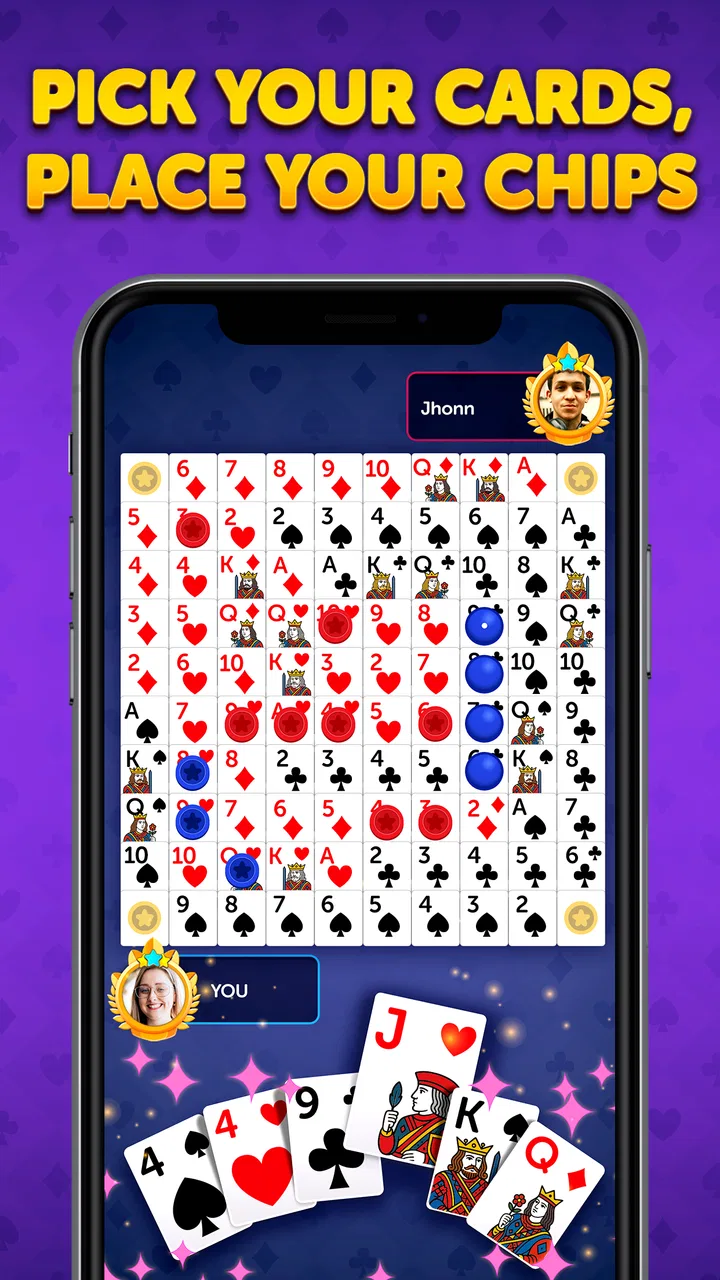
How clearly the game communicates its board and choices
The strongest part of the experience is the relationship between the cards and the objective. A sequence-based game gives me a visible goal to work toward, so I am rarely wondering what the general purpose of a move is. That clarity matters for new players and also helps when I return after a break. I can look at the board, identify the useful connections, and begin planning without first relearning a large collection of rules.
You May Also Like

 Blood Strike: 2.5 Anniversary
Blood Strike’s Loadouts Turn Every Drop Into a Tactical Gamble
A close look at Blood Strike’s custom loadouts: how fast access to signature weapons reshapes its battle royale rhythm, rewards preparation, and narrows the gap between fights.

 Pandora - Music & Podcasts
Pandora’s Music Is Easy to Start, but Harder to Recover
Pandora’s strength is its low-effort path from a seed to a station. Its weak spot is how much confidence it asks you to place in connection, setup, and quiet recovery.

 8 Ball Pool
 Is Built on Rivalries, Rematches, and Routine
A close look at the rivalries, rematches, shared routines, and unanswered safety questions that turn a quick pool match into a persistent mobile community.

 Samsung Music
’s Quiet Strength Is Playing What You Already Own
Its reach comes less from spectacle than from dependable access to a personal library. That simplicity is both the app’s strongest retention engine and its ceiling.

 AccuWeather: Weather Radar
AccuWeather Review: A Quick, Clear Forecast for Everyday Decisions
For everyday plans, the best forecast is the one you can understand quickly. AccuWeather makes rain timing, radar, and local conditions easy to act on, with a few trade-offs.

 Hill Climb Racing
Why Hill Climb Racing Still Turns Crashes Into One More Run
A tiny car, a bumpy hill and one more upgrade: Hill Climb Racing keeps resurfacing because its simple chaos makes every near-miss feel personal.
More From Our News Desk
View All News


Card Connect: Make Sequences benefits from the fact that card symbols are familiar. Players who already understand suits, values, or the general logic of arranging cards have a useful starting point. Even someone who does not usually play board games can grasp the central task more easily than they might understand a game built around a long list of special abilities.
Navigation is most comfortable when the game keeps the active decision visually obvious. In a card game, I need to distinguish my available cards from the cards already placed, recognize whose turn or phase is active, and understand what action is expected next. When those elements are separated clearly, the game feels calm. When they compete for attention, a simple turn can become unnecessarily tiring.
My practical advice is to begin with short sessions rather than treating the game as something that demands a long uninterrupted commitment. That gives you time to learn the visual rhythm: where your cards appear, how a completed sequence is shown, and which parts of the screen deserve attention. This is especially useful for younger players or anyone who prefers learning through repetition instead of reading instructions first.
The large advantage over many traditional physical card games is consistency. A physical table can become cluttered, and players may disagree about where a card belongs or whether a sequence is complete. A digital board can keep the state organized. That reduces the memory burden of tracking every card manually, which is helpful when the player is concentrating on strategy rather than administration.
There is also a trade-off. A physical deck gives players more control over spacing, lighting, and the way cards are held. On a phone, the layout is fixed by the screen. If the display feels crowded, I cannot simply spread the cards farther apart with my hands. This is one reason the game may feel better on a larger device than on a small phone, particularly for players who need more visual breathing room.
Readability depends on the situation
Card symbols are usually easier to interpret than dense written instructions, but readability is not only about recognizing a suit or number. Contrast, card size, background decoration, and the distinction between selected and unselected cards all affect how quickly I can make a decision. A player with reduced vision may understand the rules perfectly and still find the board demanding if several cards look too similar at a glance.
I would test the game with the device brightness set to a comfortable level rather than assuming the brightest setting is best. In a dark room, excessive brightness can be tiring; outdoors, a dim screen can make the cards difficult to separate. This sounds minor, but a sequence game involves repeated visual comparison, so small sources of strain accumulate over time.
Players who use system-wide text enlargement should also judge the game by the actual board rather than by the phone’s general settings. Enlarged system text does not automatically make every game element larger. If the card symbols remain the same size, the most useful adjustment may be changing the viewing distance, rotating the device if the layout allows it, or choosing a larger screen.
Color is another consideration. Card games often rely on familiar visual categories, but color should not be the only way to identify a meaningful difference. Symbols and numbers provide a second route, which is helpful for players who do not distinguish every color comfortably. I still recommend checking whether the board remains understandable in grayscale or under low-quality lighting. If important information disappears when color is less clear, that is a real barrier even when the rules themselves are simple.
Motor effort and touch accuracy
The game’s likely appeal for people who prefer low-pressure play comes partly from the turn-based structure. I do not have to react to a moving target or perform a rapid chain of taps. That is a meaningful difference from action-oriented card games, where a missed touch can decide the result before I have time to recover. A slower decision cycle gives players more opportunity to position a finger carefully.
Even so, card selection is not automatically easy for every hand or device. Small cards can be difficult to tap accurately, especially when several are close together. A player with tremors, limited reach, joint pain, or a preference for using one hand may find that the physical interaction is more demanding than the strategic part. The best approach is to hold the device in a stable position and avoid playing while walking or carrying something else.
One useful habit is to pause before tapping when the board contains several tempting moves. That helps in two ways: it improves strategic play, and it reduces accidental selections caused by hurried movement. I also prefer playing with the device resting on a table or cushion when I expect a longer session. This removes some of the grip effort that can distract from the cards.
Players who rely on a stylus may find precise selection easier, while others may prefer a larger tablet and a fingertip. The right setup depends on the person, but the game is well suited to experimenting with posture because it does not demand constant physical movement. That makes it more adaptable than games built around swipes, rapid taps, or device motion.
The limitation is that a board game on a touchscreen still assumes direct interaction. Someone who cannot reliably perform touch gestures may need an alternative input method supported by the device, but I would not assume that every external controller or switch setup will work smoothly with this particular title. That uncertainty is important: the game may be conceptually accessible while the act of selecting a card remains difficult.
Playing with sound, silence, and interruptions
A card game is naturally suited to quiet environments. I can imagine playing it during a short break, while waiting for an appointment, or at home with the sound turned down. That is useful for people who are sensitive to noise, working in a shared space, or simply looking for a game that does not demand constant audio attention.
At the same time, visual feedback becomes more important when sound is unavailable. If a player mutes the device, they need to understand from the board what changed after a move. For me, that is the better design principle for this kind of game anyway: a card placement should be clear because of its position and state, not because an effect sound tells me that something happened.
Short, interruptible play is another practical strength. If I need to put the phone down, answer a message, or move to a quieter room, a strategic card game is easier to resume than a real-time match. I would still avoid assuming that every interruption is harmless; losing track of the current board can make a return confusing. Before leaving a session, I try to note what sequence I was building and what the immediate threat was.
This makes the game a reasonable choice for players whose attention varies during the day. It can support a focused session, but it does not require the same uninterrupted concentration as a fast multiplayer game. That said, players who enjoy constant stimulation may find its pace too restrained. The very calmness that helps one audience can feel slow to another.
What the strategic layer adds
The central decision is not merely whether a card fits. I have to think about the value of completing a sequence now versus keeping options open for a later turn. A move that looks immediately useful may reduce flexibility, while a less obvious placement can preserve several possible routes. This is where the game moves beyond a basic connect-the-pairs exercise.
For new players, I recommend looking at the board before looking at the most attractive card in hand. First identify which sequences are close to completion, then check whether an opponent or future move could make that route less useful. This simple two-step scan prevents the common mistake of playing the first obvious connection without considering the next turn.
Another helpful technique is to separate urgent moves from efficient moves. An urgent move prevents a problem or protects a nearly completed sequence. An efficient move creates more than one future possibility. When those goals conflict, the right choice depends on the board, but recognizing the difference makes the game easier to analyze and helps players improve without relying on luck alone.
This is also where Card Connect: Make Sequences compares favorably with casual matching games. Matching games often reward quick recognition and repetition. Here, the more valuable skill is planning under changing conditions. Traditional tabletop card games may offer richer social interaction and more tactile feedback, while this digital version is more convenient and keeps the board tidy. I would choose it for solo downtime or a quick mental exercise, not as a replacement for a lively table full of friends.
Who will benefit most from the format
I think the game is a good fit for players who like familiar card imagery but want a little more thought than simple luck. It can work for a family member who is comfortable with turn-based games, a commuter looking for something that can be paused, or a board-game beginner who prefers one clear objective instead of a complicated ruleset.
It may also suit people who become overwhelmed by fast interfaces. The sequence goal gives the session a stable structure, and the lack of an action-game reflex requirement makes it easier to play at an individual pace. For players with attention differences, the visible board can be useful because it externalizes the information that would otherwise need to be held in memory.
However, I would not recommend it automatically to someone seeking deep social play, elaborate storytelling, or a large variety of game modes. The appeal is concentrated in arranging cards and making strategic choices. If you need constant novelty or a strong competitive conversation around the table, a physical board game or a more feature-heavy digital title may be a better match.
Players with severe visual fatigue should try a brief session first. The familiar card format helps, but repeated scanning is still the core activity. Likewise, anyone who finds touchscreen targeting frustrating should test whether the card layout gives enough room for reliable taps on their specific device.
Everyday scenarios where it works—and where it does not
Imagine having fifteen quiet minutes before leaving for work. A game like this can fill that gap without requiring headphones, a full table, or a long setup. I can sit down, inspect the board, make a few deliberate decisions, and stop when the available time runs out. That is more convenient than unpacking a physical deck, especially when I am alone.
Another realistic use is playing beside someone who is resting. Because the game is visually driven and does not need a loud room, it can fit into a shared household more easily than an action game. The player can keep the volume low and focus on the board. This does not make it universally accessible, but it reduces one common source of friction.
On the other hand, I would avoid using it in a moving vehicle, while walking, or in bright sunlight that makes the screen hard to read. Those conditions add physical and visual demands that have nothing to do with strategy. A calm game is not automatically safe or comfortable in every setting.
It is also not ideal when the goal is to teach a group face to face. A physical deck lets everyone point at the same cards, negotiate moves, and share the learning process. The digital board is more private and controlled. That is a benefit for solo play, but a limitation for a group that wants conversation as part of the entertainment.
Remaining barriers before you choose it
The biggest accessibility question is not the simplicity of the rules; it is how well the visual and touch presentation fits each player. A clean card concept can still become difficult if symbols are small, selection states are subtle, or the screen becomes crowded. I would judge the game on the device you actually plan to use, not on the concept alone.
There is also a cognitive trade-off. A clear objective reduces the initial learning burden, but good play requires tracking several possible sequences and anticipating consequences. Someone looking for a purely relaxing activity may feel that the strategic layer asks for more concentration than expected. Conversely, players who enjoy planning may find the same demand rewarding.
Free access makes it easy to try without committing money, which is valuable when you are testing comfort and readability. Still, “free” should not be confused with “effortless.” Your time, attention, and screen comfort are the real costs. I would give it a fair trial across more than one setting—quiet room, ordinary indoor lighting, and a short interrupted session—before deciding whether it belongs in your regular rotation.
The age classification is Everyone, so the presentation is positioned for a broad audience. Parents and caregivers should still consider the individual player’s ability to read the board, understand turn choices, and use touch controls. A broad age label does not replace personal judgment about whether the interaction is comfortable.
My inclusive verdict
Card Connect: Make Sequences is a thoughtful choice for players who want a free, familiar card game with a real planning element. I appreciate that its core task can be understood quickly, played without frantic reactions, and fitted into quiet everyday moments. Its strongest inclusive quality is the combination of recognizable card logic and a pace that gives the player time to examine the board.
I would recommend it to someone who enjoys calm strategy, needs a game that can fit around interruptions, or prefers visual decision-making to rapid reflexes. I would be more cautious for anyone who needs large, highly customizable controls, relies on non-touch input, or experiences fatigue from repeated close visual comparisons. In those cases, a physical game with adjustable card spacing or a digital alternative with clearly documented accessibility controls may serve better.
FunCraft Games has chosen a focused idea rather than an overloaded one, and that focus is what makes the game approachable. The experience will not satisfy every type of board-game player, but it does not need to. For me, it works best as a compact strategic break: easy to start, quiet enough for shared spaces, and deep enough that a careless move can teach me something for the next round. If you value clarity, patience, and deliberate choices more than spectacle, this is worth trying.
FAQs for Card Connect: Connect & Win!
01What is Card Connect: Make Sequences about?
Card Connect: Make Sequences is a strategic card game that challenges players to connect cards in sequential order to score points. The game offers various levels of difficulty, making it suitable for both casual players and those seeking a more challenging experience. The interface is user-friendly, with vibrant graphics that enhance the gameplay.
02Is Card Connect: Make Sequences free to play?
Yes, Card Connect: Make Sequences is free to download and play. However, it does offer in-app purchases that can enhance the gaming experience. These purchases may include additional levels, special cards, or cosmetic upgrades. Players can enjoy the core features without spending money, but optional paid content is available for those interested.
03What are the system requirements for Card Connect: Make Sequences?
The app is designed to run smoothly on both Android and iOS devices. For Android users, it requires version 5.0 or higher, while iOS users need version 10.0 or later. The game is optimized for both smartphones and tablets, ensuring a seamless experience across different screen sizes and resolutions.
04Does Card Connect: Make Sequences offer multiplayer options?
Yes, Card Connect: Make Sequences includes a multiplayer mode where you can challenge friends or compete against players worldwide. The game features a matchmaking system that pairs you with opponents of similar skill levels. You can also invite friends directly via social media or email to join a game.
05Is there customer support available for issues with the game?
Absolutely, Card Connect: Make Sequences has a dedicated customer support team available to assist with any issues. Players can reach out via the app’s help section or the official website. Support includes troubleshooting, account issues, and feedback on gameplay. The team is responsive and aims to resolve inquiries promptly.
Pros
- Intuitive interface that's easy to navigate.
- Simple yet challenging gameplay mechanics.
- Regular updates with new levels and features.
- No intrusive ads during gameplay.
- Supports offline mode for uninterrupted play.
Cons
- Limited card themes available.
- No multiplayer mode for competitive play.
- Occasional crashes on older devices.
- Requires frequent in-app purchases.
- Limited customization options for avatars.

Card Connect: Connect & Win!
Gallery